Stumbling Fern, Drifting Cloud
Tên thường Thấy: Bèo Dạt Mây Trôi
“Bèo dạt mây trôi” là một bài hát dân ca Việt Nam, với nội dung thể hiện nỗi nhớ của người con gái/chàng trai đối với người yêu ở phương xa. Chưa có nghiên cứu xác định được chính xác nguồn gốc của bài nhưng các website âm nhạc Việt Nam phần lớn đều cho rằng bài xuất xứ từ quan họ Bắc Ninh, trong khi đó các phương tiện thông tin đại chúng lại nhận định bài là dân ca đồng bằng Bắc bộ, thậm chí là dân ca Nghệ Tĩnh.
Bài hát được thể hiện cao trào khi người con gái ngồi một mình trong đêm khuya chờ chàng trai đang đi xa. Ngày đêm người con gái luôn thao thức đợi chờ, mong ngóng, tiếng trống canh thúc dồn dập báo thời gian trôi qua, tạo cho người nghe âm hưởng và xúc động qua những câu:
…Bèo dạt mây trôi, chốn xa xôi, anh ơi, em vẫn đợi…
…Ngậm một tin trông, hai tin đợi, ba bốn… tin chờ, sao chẳng thấy anh…?
…Người đi xa có nhớ, là nhớ ai… ngồi trông cánh… chim trời. Sao chẳng thấy anh?
Ca từ trong bài Bèo dạt mây trôi rất giản dị, gần gũi với nông thôn Việt Nam, sử dụng những hình tượng nghệ thuật như cánh bèo, chim, cá, mây, trăng, gió v.v. tạo ra một khung cảnh nhớ nhung sâu lắng. Cảnh vật nông thôn thời xưa thể hiện rõ nét, không gian và thời gian như nhập vào một, chất trữ tình mạch lạc. Đặc biệt ở nhan đề “Bèo dạt mây trôi” sử dụng một câu tục ngữ quen thuộc trong đời sống hàng ngày của nông dân Việt. Tạo ra cho ca khúc một đặc điểm quan trọng đó là dễ đi vào lòng người nghe.
Another Common Title: Bèo Dạt Mây Trôi
“Bèo dạt mây trôi” is a traditional Vietnamese folk song that expresses the longing of a young girl or boy for a distant lover. While the exact origin of the song has not been conclusively determined, most Vietnamese music websites attribute it to the quan họ singing tradition of Bac Ninh. However, mainstream media suggests that the song belongs to the folk music of the Red River Delta region, possibly even the Nghệ Tĩnh folk tradition.
The song reaches its climax as the young girl sits alone in the night, anxiously waiting for her distant lover. Night after night, she remains restless, anticipating the sound of the drum, marking the passage of time. The poignant and emotional lyrics resonate with the listener through lines like:
“…Bèo dạt mây trôi, in a distant place, my dear, I still wait for you…
…With one hope in mind, two hopes waiting, three, four… waiting for news, why don’t I see you…?
…Someone far away remembers, but who do they remember… sitting, watching the wings of the birds… Why don’t I see you?”
The lyrics of “Bèo dạt mây trôi” are simple and intimately connected to rural life in Vietnam, incorporating artistic imagery such as lotus leaves, birds, fish, clouds, moon, and wind. These elements create a deeply nostalgic landscape. The rural scenery from the past is vividly portrayed, merging space and time seamlessly, infusing the song with a rich sentimentality. The title itself, “Bèo dạt mây trôi,” employs a familiar proverb in the daily life of Vietnamese farmers, giving the song a distinct and easily relatable quality.
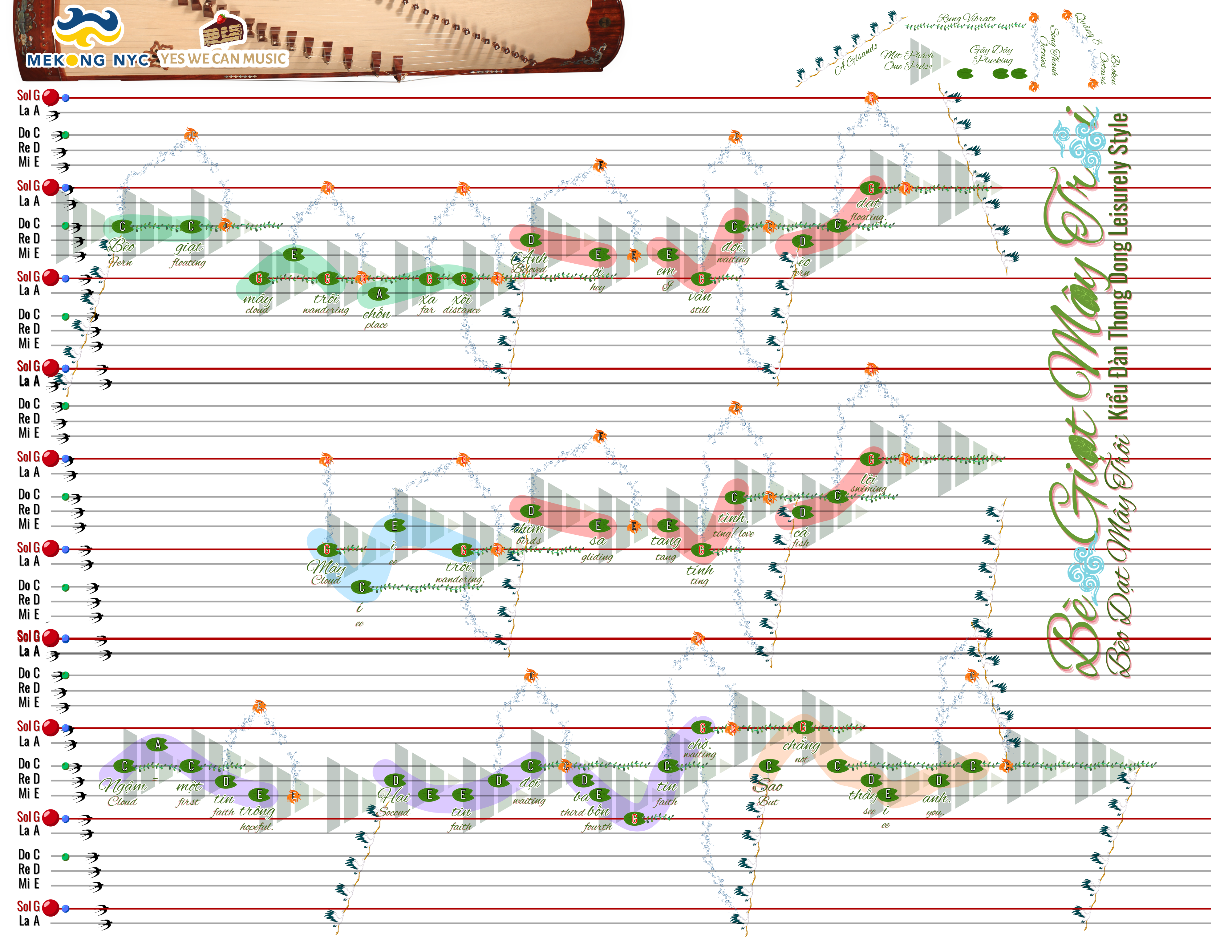
Legend for Đàn Tranh’s Tablature used for “Bèo Giạt Mây Trôi”
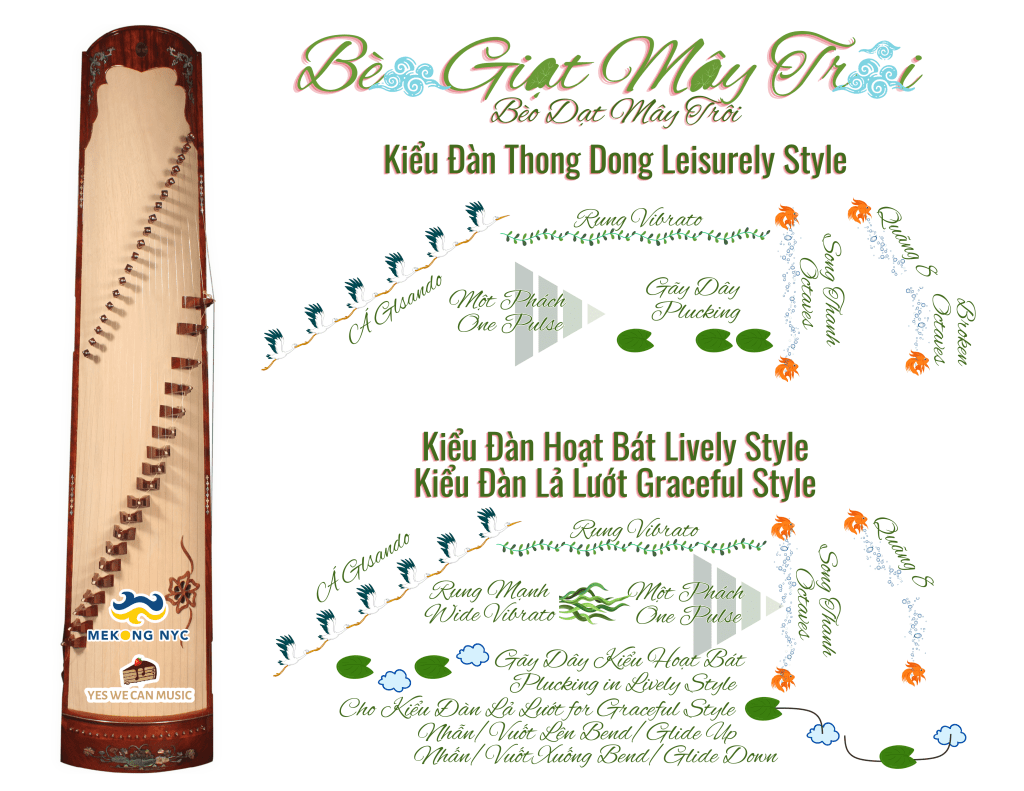
Kiểu Đàn Thong Dong – Leisurely Styel
Kiểu Đàn Hoạt Bát – Lively Style
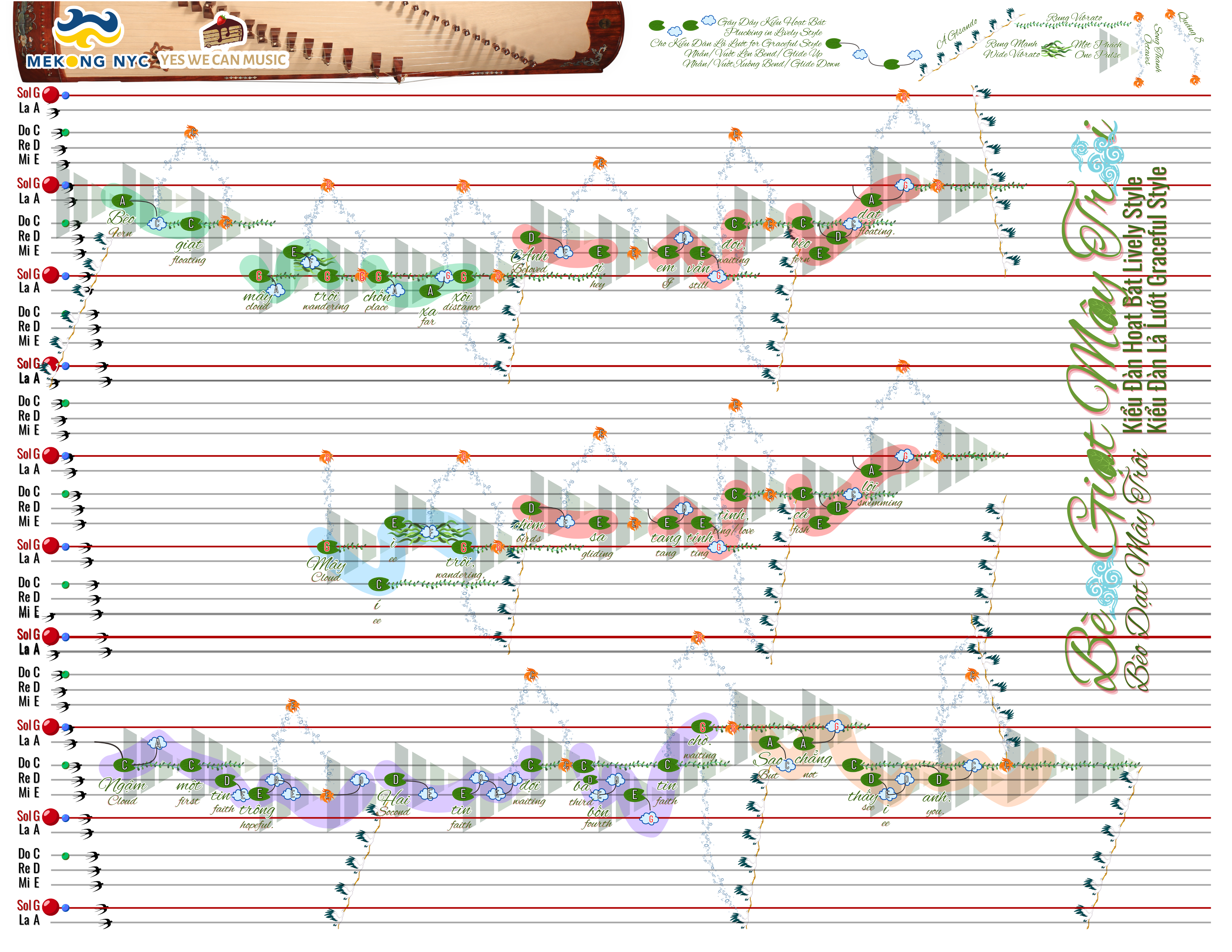
Kiểu Đàn Hoạt Bát – Lively Style
Same tablature as “Kiểu Đàn Hoạt Bát – Lively Style,” but the “cloud” notes will not be plucked; instead, only the left hand will be used to bend the notes.
Practice Video in all 3 Styles
This video showcases short segments of the songs in a looped fashion, allowing you to practice along. The YouTube link is provided, enabling you to scroll down to the video description and access clickable time stamps. This feature allows you to jump to specific sections for targeted practice.
Another notable aspect of this video is the demonstration of a single session in multiple ways, commonly employed by Đàn Tranh artists. They present their own renditions, encouraging you to mix and match these techniques to create your unique version. The primary goal of this video is to empower you to develop your own interpretation. Some highlighted techniques include:
- Incorporating left-hand Rung Vibratos on Dây hò G and C strings
- Breaking up the final note into Quãng 8 Broken Octaves
- Introducing Á Glissandos at the beginning of the phrase
- Adding Song Thanh Blocked Octaves to emphasize heightened moments
- And more.
Feel free to explore and integrate these techniques to craft your personalized rendition.
 Manhattan Academy of Music & Language